



Real estate litigation is the formal legal process of resolving a property dispute through the courts. It comes into play when negotiation fails, and one party needs the legal system to enforce their rights.
At Dill, Evans & Rhodeback, our attorneys handle real estate disputes throughout Florida’s Space and Treasure Coasts. Here is what you need to know.
What Is Real Estate Litigation?
Real estate litigation is a civil process, not a criminal one. The goal is to enforce legal rights or recover losses related to property, not to pursue criminal penalties.
It applies to any type of property: residential homes, commercial buildings, vacant land, and investment properties.
Florida has specific statutes that govern how real estate disputes are handled. According to the Florida Attorney General’s Office, Florida law provides a framework for enforcing contracts, clearing title, and resolving competing claims to property. Deadlines and procedural rules vary by case type, which is why legal guidance matters early.
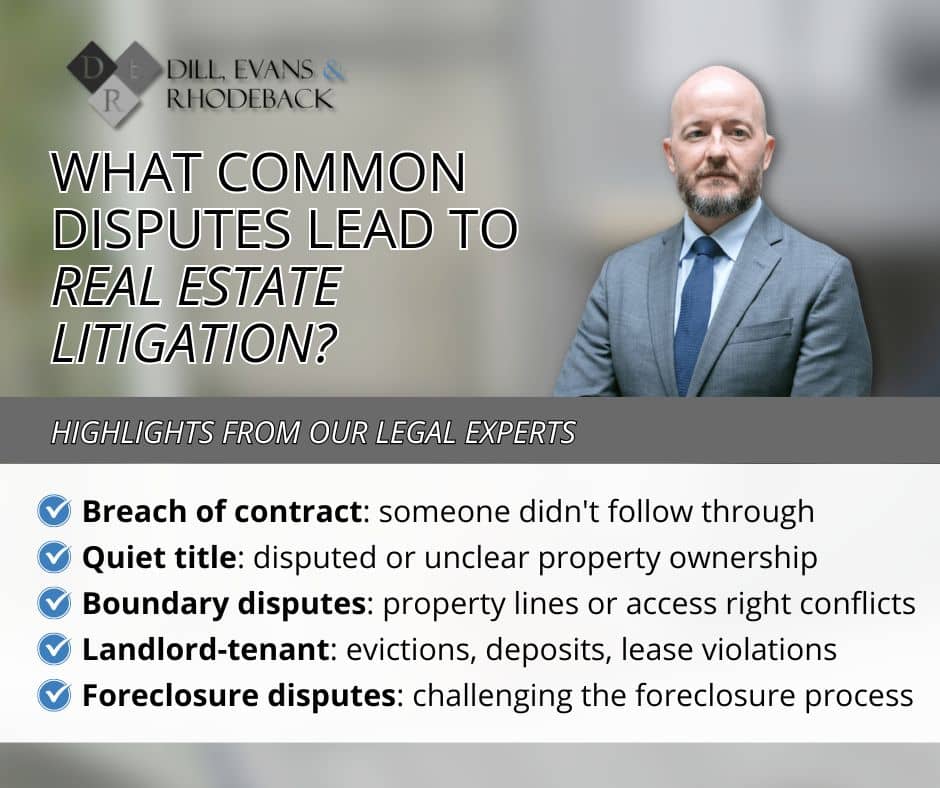
Common Types of Real Estate Disputes
These are the disputes our real estate attorneys see most often.
- Breach of contract: when one party fails to follow through on a purchase agreement, fails to disclose a known defect, or does not perform as required under a contract.
- Quiet title actions: a lawsuit to establish clear legal ownership when title defects, old liens, competing heir claims, or recording errors cloud the title.
- Boundary and easement disputes: disagreements over property lines, encroachments, or access rights that cannot be resolved between neighbors.
- Landlord-tenant disputes: eviction proceedings, security deposit conflicts, lease violations, and habitability claims.
- Foreclosure and mortgage disputes: lender-initiated foreclosure proceedings, or a borrower challenging the process when rights have not been honored.
How the Real Estate Litigation Process Works in Florida
Real estate cases in Florida follow the standard civil litigation process. Here is a general overview of how it works.
Filing a Complaint
The process starts when one party (the plaintiff) files a legal complaint in the appropriate Florida court. The complaint identifies the parties, describes the dispute, and states what relief the plaintiff is seeking.
The other party (the defendant) then has a set number of days to respond.
Discovery and Negotiation
After the complaint is filed, both sides exchange information through a process called discovery. This may include document requests, depositions, and written questions.
Discovery often surfaces facts that lead both sides to settle before trial.
Mediation, Trial, or Settlement
Florida courts typically require the parties to attempt mediation before going to trial. Mediation is a structured negotiation where a neutral third party helps both sides work toward an agreement. Many real estate cases settle at or before this stage.
If mediation fails, the case proceeds to trial, where a judge or jury decides the outcome.
Our team is experienced in both courtroom advocacy and pre-trial resolution.
Do All Real Estate Disputes End Up in Court?
No. Many disputes are settled through negotiation or mediation before a trial is ever needed.
Having an attorney involved early puts you in a stronger position to resolve things on favorable terms. Cases with a clear paper trail or a straightforward fact pattern often settle quickly. Cases involving fraud, multiple competing claimants, or an uncooperative opposing party are more likely to go to trial.
Either way, knowing your options from the start matters. The Florida Bar’s attorney directory is a good resource for verifying an attorney’s credentials before you hire.
Related Questions to Explore
What does litigation mean in real estate? Litigation in real estate means using the court system to resolve a property dispute. It is the step taken when negotiation has failed, and a legal ruling is needed to move forward. Cases can involve contracts, title, boundaries, landlord-tenant matters, and more.
How much does a real estate litigation attorney cost? It depends on the case. Some attorneys charge hourly; others use flat fees for straightforward matters like quiet title actions. The best way to get an accurate picture is to schedule a consultation so an attorney can assess the scope of your situation.
What is the meaning of property litigation? Property litigation and real estate litigation mean the same thing in most Florida legal practice. Both refer to disputes over ownership rights, contractual obligations, or the use of real property. Our attorneys have handled these cases across the Space and Treasure Coasts for over 30 years.
Are most real estate disputes civil matters? Yes. Real estate disputes are civil, not criminal. Remedies are typically damages, injunctions, or specific performance orders. A case becomes criminal only when fraud, theft, or another crime is involved. If you believe fraud played a role in your transaction, an attorney can evaluate whether civil and criminal avenues both apply.
When to Call an Attorney
Contact an attorney as soon as a dispute becomes apparent. Waiting limits your options.
Common situations that warrant a call:
- A contract has been breached, and the other party is not responding
- A title report shows liens, competing claims, or defects you were not aware of
- A neighbor is encroaching on your property or disputing a boundary
- You are facing foreclosure and want to understand your rights
- A landlord-tenant situation has escalated beyond informal resolution
- A contractor failed to complete work or performed it incorrectly
The attorneys at Dill, Evans & Rhodeback serve property owners, buyers, sellers, investors, and businesses throughout Sebastian, Vero Beach, Melbourne, Port St. Lucie, and surrounding communities.
Conclusion
Real estate litigation is the legal process for resolving property disputes when negotiation fails. Most cases settle before trial with the right legal support.
Whether you are dealing with a broken contract, a title issue, or a boundary conflict, getting an attorney involved early gives you the best chance at a controlled outcome.
Contact us to schedule a consultation with the team at Dill, Evans & Rhodeback.