



Litigation is the formal process of resolving a legal dispute through the court system. There are several distinct types of litigation, and the one that applies to your situation depends on what the dispute is about.
At Dill, Evans & Rhodeback, we handle a wide range of civil litigation matters for individuals, families, and businesses throughout Florida’s Space and Treasure Coasts. This post breaks down the main types of litigation and what each one typically involves.
What Is Litigation?
Litigation is any legal dispute that is resolved through the court system rather than through private negotiation alone.
It begins when one party files a formal complaint and ends with either a settlement or a court decision.
Most litigation in the context of a private law firm is civil litigation. Civil cases involve disputes between individuals, businesses, or other private parties. They are distinct from criminal cases, where the government prosecutes someone for breaking the law.
Per the U.S. Courts, civil cases resolve disputes between private parties and can result in monetary awards or court orders to act or stop acting in a certain way.
The Main Types of Litigation
Litigation falls into several categories depending on the nature of the dispute.
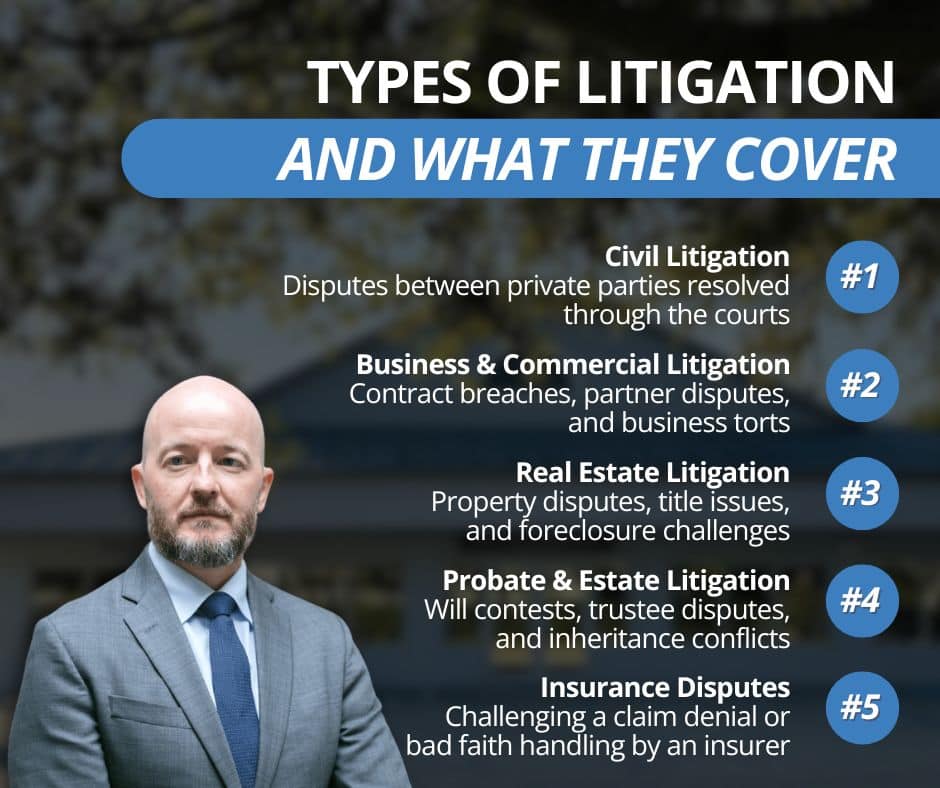
Here is a breakdown of the types most commonly handled by a civil litigation firm, including but not limited to the kinds of cases we take on at Dill, Evans & Rhodeback.
Civil Litigation
Civil litigation is the broadest category. It covers almost any dispute between private parties that does not involve criminal charges. Contract disputes, property conflicts, injury claims, and family law matters all fall under the civil litigation umbrella.
In Florida, civil cases are typically filed in county or circuit court, depending on the dollar amount or type of claim involved. A civil litigation attorney represents you throughout the process, from filing the initial complaint through discovery, mediation, and trial if necessary.
Business and Commercial Litigation
Business litigation covers disputes that arise out of commercial relationships. This includes breach of contract claims, partnership and shareholder disputes, business torts like fraud or interference with a business relationship, and collections matters.
These cases can involve significant financial stakes and often move quickly. Having an attorney involved early helps protect your position, whether you are the party bringing the claim or defending against one. Our attorneys handle these matters for businesses of all sizes across the Space and Treasure Coasts.
Real Estate Litigation
Real estate litigation covers disputes tied to property. Common examples include breach of a purchase or sale contract, quiet title actions to resolve competing ownership claims, boundary and easement disputes between neighbors, landlord-tenant conflicts, and foreclosure proceedings.
Florida has specific statutes and procedural rules that apply to real estate disputes, so the details of your case matter. For a deeper look at how this type of litigation works, see our post on real estate litigation.
Probate and Estate Litigation
Probate litigation involves disputes that arise during the administration of a deceased person’s estate. Common scenarios include will contests, claims of undue influence or lack of capacity, disputes over the interpretation of trust documents, allegations of breach of fiduciary duty by a personal representative or trustee, and conflicts between heirs over asset distribution.
These cases often carry both financial and emotional weight. Florida’s probate rules set specific timelines and procedures that must be followed closely. Our estate planning and probate attorneys can help families navigate these disputes with care and clarity.
Insurance Disputes
Insurance litigation arises when a policyholder and an insurer disagree over a claim. Common scenarios include a denied property damage claim, a dispute over the value of a covered loss, or a bad faith claim where an insurer unreasonably delays or refuses to pay what is owed.
These cases can involve homeowner’s insurance, commercial property policies, and other coverage types tied to real estate or business interests. If an insurer is not honoring a valid claim, litigation may be the fastest path to a fair resolution.
How Florida Litigation Works
Regardless of the type, most civil litigation in Florida follows a similar path.
- Filing a complaint: the party bringing the claim files in the appropriate Florida court and formally notifies the other side.
- Answer and defenses: the opposing party responds, admitting or denying the claims and raising any defenses.
- Discovery: both sides exchange documents, answer written questions, and may take depositions. Many cases resolve during this stage.
- Mediation: Florida courts require mediation in most civil cases before trial. A neutral mediator helps both sides negotiate a resolution. The majority of cases settle here.
- Trial: if mediation fails, a judge or jury hears the evidence and decides the outcome.
- Appeals: either party may appeal a trial court decision to a higher court if there are grounds to do so.
Our team handles cases at every one of these stages. We also assist with pre-litigation demand letters, arbitration, and post-judgment enforcement when needed.
Related Questions to Explore
What are some examples of litigation? Common examples include a homeowner suing a contractor for incomplete work, two business partners disputing ownership rights, a family contesting the validity of a will, a landlord pursuing eviction through the courts, and a buyer seeking to enforce a real estate purchase agreement. Each of these is a civil litigation matter.
What are the three most common types of litigation seen by companies? For businesses, the most common types are breach of contract disputes, business tort claims like fraud or interference with business relationships, and employment-related disputes. Companies that own real estate also frequently encounter real estate litigation. For guidance on protecting your business legally, visit our dedicated business law page.
How is civil litigation different from criminal cases? In a criminal case, the government brings charges against a person for violating a law, and the potential outcome includes fines or imprisonment. In a civil case, one private party brings a claim against another, and the outcome is typically a monetary award or a court order. Civil litigation does not result in criminal penalties, though some conduct can give rise to both civil and criminal proceedings.
When to Talk to an Attorney
You should reach out to an attorney as soon as you believe a dispute may require legal action. Waiting can limit your options or affect important deadlines.
Here are situations that warrant a call:
- You have received a lawsuit, demand letter, or legal notice
- A contract has been broken, and informal resolution has not worked
- A business relationship has broken down, and financial losses are involved
- You are involved in a property dispute that is not resolving on its own
- You are an heir or personal representative dealing with an estate conflict
- You have been injured and are dealing with an insurance company that is not responding fairly
The attorneys at Dill, Evans & Rhodeback serve clients throughout Sebastian, Vero Beach, Melbourne, Port St. Lucie, and surrounding communities.
Schedule a consultation to get a clear picture of your options.
Conclusion
Litigation covers a wide range of legal disputes, from contract fights and property conflicts to estate battles and personal injury claims. The type of litigation that applies to your situation determines which laws and procedures govern your case.
Whatever the dispute, getting qualified legal guidance early gives you the best chance at a favorable outcome.
Contact Dill, Evans & Rhodeback to schedule a consultation with our litigation team.