



Starting a business means making a lot of decisions quickly. Most people focus on the product, the customers, and the money. Legal setup usually comes last. The problem is that early decisions are hard to undo.
The structure you choose, the agreements you sign, and the documents you skip can follow your business for years. A business attorney does not slow you down. They help you avoid mistakes that are expensive to fix later.
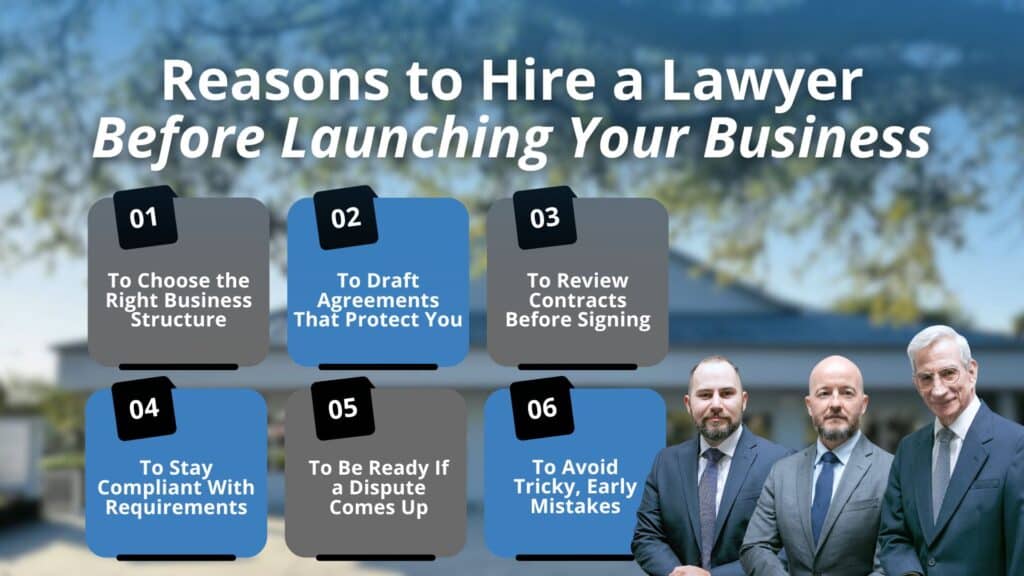
Here are six reasons to bring one in from the start.
1. The Right Business Structure Is Not One-Size-Fits-All
Florida business owners can choose from several entity types:
| Entity Type | Good For |
| Sole proprietorship | Simple, one-person operations |
| General partnership | Multiple owners, informal setup |
| LLC | Liability protection, flexible taxes |
| S-Corp or C-Corp | Structured ownership, potential investor appeal |
Each one affects your personal liability, how you are taxed, and how easy it is to add partners or investors later.
An LLC is the most common choice for small businesses, but it is not always the right one.
An attorney helps you think through your specific goals before you file anything. Changing your structure after the fact is possible, but it is more complicated than getting it right the first time.
2. Filing Paperwork Does Not Mean You Are Protected
Registering with the Florida Division of Corporations puts your business on record. That is it.
The documents that actually govern how your business runs are a different matter entirely. These include:
- Operating agreements for LLCs
- Bylaws for corporations
- Partnership agreements for businesses with multiple owners
These documents decide who can make decisions, what happens when an owner wants out, how profits are split, and how disagreements get handled. Many businesses skip them or use generic online templates that do not reflect the real arrangement between owners.
When a disagreement eventually comes up (and with multiple owners, it usually does), the absence of a solid agreement becomes a serious problem. An attorney drafts these documents for your situation, not a hypothetical one.
3. Every Contract Is Either Working For You or Against You
Once your business is running, contracts show up constantly:
- Client and vendor agreements
- Service contracts
- Commercial leases
- Independent contractor arrangements
Many small business owners sign without having documents reviewed, either because they trust the other party or because they do not want to slow things down. Neither is a good enough reason to skip it.
A business attorney reviews contracts before you sign, flags terms that are unclear or unfavorable, and drafts your own agreements to say exactly what you mean. That upfront work costs far less than a contract dispute down the road.
4. Florida Has Requirements That Are Easy to Miss
Starting a business here is not just about having a good idea and filing paperwork. Depending on what you do and where you operate, you may be dealing with:
- State licensing requirements
- Local permits and zoning restrictions
- Industry-specific regulations
- Annual reporting obligations
Missing one can mean fines, forced closure, or having to redo work you already paid for. A business attorney familiar with Florida’s commercial environment helps you figure out what applies before you open your doors.
5. Disputes Happen to Most Businesses
According to the SBA, between 36% and 53% of small businesses are sued in any given year.
Many of those disputes trace back to unclear agreements or missing documentation from early in the business.
When a dispute does come up, it helps to have an attorney who already knows your structure, your agreements, and your history. That context matters whether the issue gets resolved through negotiation or ends up in court.
Dill, Evans & Rhodeback handles both business formation and litigation. The same firm that helps you set up your business can represent you if something goes sideways later.
6. Some Early Mistakes Are Hard to Fix
A few of the decisions that catch business owners off guard later:
- Choosing the wrong entity type for how the business actually grew
- Skipping owner agreements that would have prevented a dispute
- Missing employee classification rules that created tax liability
- Failing to document intellectual property ownership from the start
These are not paperwork problems. They are decisions made without fully understanding the consequences. Early legal guidance is about making sure you know what you are agreeing to before it matters.
Other Related Questions to Explore
Does a business owner need a will or estate plan?
Yes. If you own a business, your estate plan needs to account for it. What happens to your ownership stake when you die? Who takes over, and under what terms? Without a plan in place, those questions get answered by Florida probate law instead of you.
A will is a starting point, but business owners often need additional tools like trusts or buy-sell agreements to protect what they have built.
What happens if a business dispute ends up in court?
Most business disputes start as contract disagreements, unpaid invoices, or ownership conflicts. Many can be resolved through negotiation or mediation before reaching a courtroom. When they cannot, litigation becomes the path forward.
Having an attorney who already knows your business structure and agreements makes a significant difference at that stage. Partition actions, which arise when co-owners cannot agree on what to do with shared property, are one example of a dispute that often escalates with no written agreement.
Do I need a lawyer to buy commercial real estate in Florida?
Florida real estate transactions involve title searches, contract review, closing documents, and a number of deadlines where mistakes are costly. Commercial purchases add layers of complexity, including zoning, environmental considerations, and lease review.
Florida does not require an attorney at closing, but having one can protect you in ways a title company cannot. The same applies to commercial leases, which are negotiable contracts, not standard forms.
Conclusion
The legal decisions you make early on set the foundation for everything that comes after. Structure, documentation, contracts, and compliance are all easier to get right from the start than to fix once the business is moving.
Dill, Evans & Rhodeback works with business owners across Florida at every stage, from formation through growth, disputes, and beyond. If you are starting a business or need other types of legal guidance, schedule a consultation with our team today.