

When someone passes away, it can leave many questions unanswered. Where is the deed to Dad’s house? How do I transfer the car? Where are all Mom’s assets? Why do I need a long-form death certificate?
Depending on the circumstances surrounding a loved one’s passing, the process may be straightforward, or it may become complicated and overwhelming for the person left asking these questions.
A last will and testament, commonly referred to as a Will, is a legal document that provides instructions for how a person’s wishes should be carried out after they pass away.
There is also something called a codicil, which is used to change certain provisions of an existing Will. This may include changing beneficiaries or appointing a new personal representative.
In Florida, a Will must be executed according to Florida law. It must be signed by the testator in the presence of two witnesses, and those witnesses must sign in each other’s presence and in the presence of the testator. This requirement is critical. If it is not followed properly, the Will may not be recognized as valid.
An attorney will often make a Will self-proving. This involves a notary witnessing and acknowledging the signatures of all parties. While a self-proving affidavit is not required, it can help avoid unnecessary delays during probate.
One common question people ask is whether they actually need a Will. Technically, no one is required to have one. However, depending on your family structure, assets, and goals, having a Will can be incredibly important.
Florida Inheritance Rules When There Is No Will
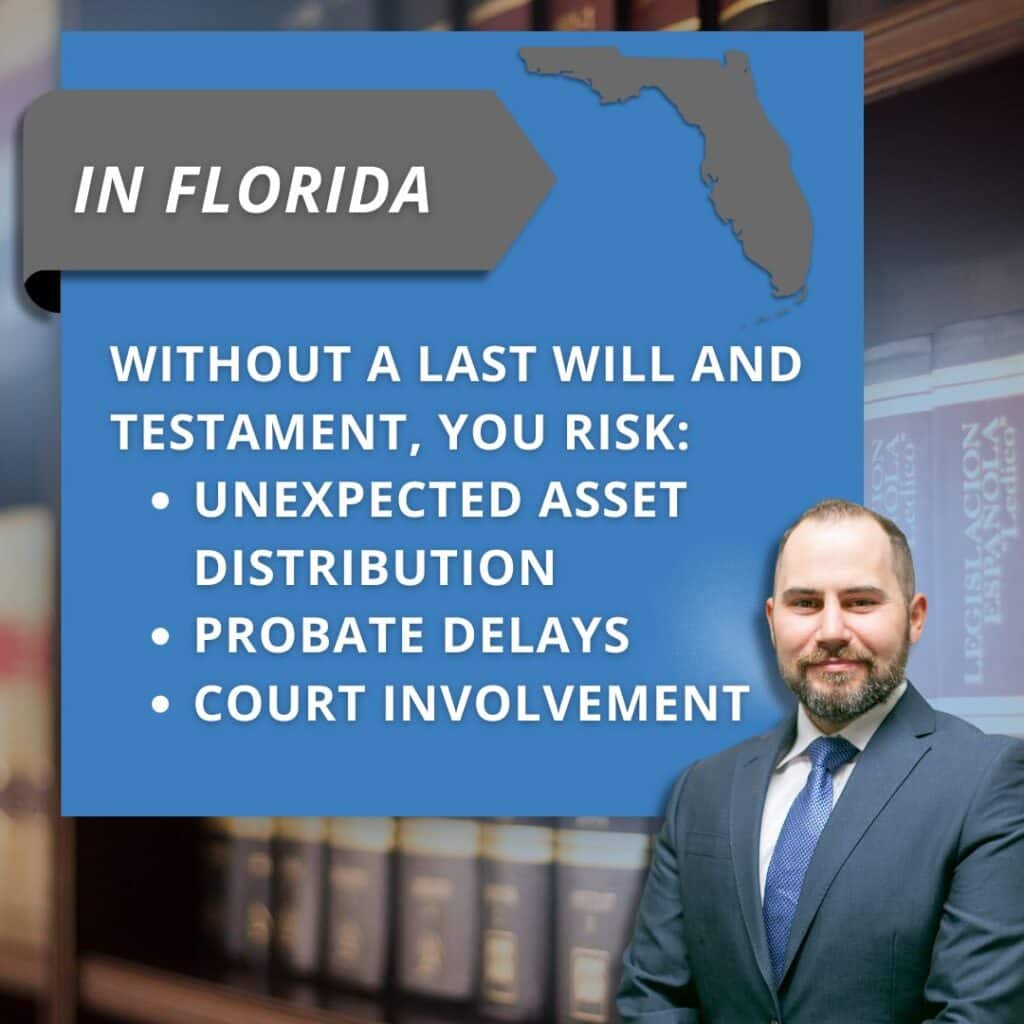
Florida, like every state, has specific laws that determine how property is distributed when someone passes away without a Will. These rules are known as intestate succession and are outlined in Chapter 732 of the Florida Statutes.
Intestate simply means the person did not have a Will. While that may sound simple, the results often are not.
Consider the following example.
A married couple has one child together. The husband also has a child from a prior relationship, whom he has not spoken to in over twenty-five years. The husband passes away without a Will.
Many people assume the surviving spouse automatically receives everything. Under Florida law, that is not the case.
In this situation, the husband’s estate would be divided equally.
Fifty percent would go to the wife, and fifty percent would go to the child from the prior relationship. The wife is now forced to share ownership and decision-making with someone her husband may not have had a relationship with for decades.
If the husband had created a Will, he could have directed his assets to his wife or structured a different outcome entirely. Because no Will existed, Florida’s default rules applied.
Now consider the same family, but with one key difference. The wife passes away first. In that case, the husband would inherit one hundred percent of the estate.
The same people are involved, yet the outcome changes completely based on who passes away first and whether a Will exists.
How Family Dynamics Can Complicate Inheritance
The situation can become even more complicated over time.
If the wife passes away first, the husband still does not create a Will, and then the husband later passes away, the child from the marriage may be required to split the combined assets of both parents with a half-sibling they may barely know.
While this may sound unlikely, scenarios like this occur more often than people expect.
Modern families are often complex. Many people remarry. Spouses may bring children from previous relationships, have additional children together, or have children born outside of marriage.
Each of these factors can significantly impact how assets are distributed under Florida law when no Will is in place.
Without proper planning through an attorney, the results may not reflect the intentions of the person who passed away.
Why Taking Control of Estate Planning Matters
Although speaking with an attorney about estate planning is not high on most people’s priority lists, it is essential to understand what may happen if no planning is done.
An estate planning attorney can help answer important questions, including:
- What qualifies as homestead property in Florida
- What happens if spouses are married but only one name is on the deed
- Whether beneficiaries may owe estate taxes
- Whether transferring property to children during your lifetime makes sense
These questions arise frequently and can carry serious consequences if handled incorrectly.
Estate planning allows you to maintain control over where your assets go. Instead of leaving decisions to Florida statutes, you decide how property is distributed and who receives what.
It also provides peace of mind knowing that thoughtful decisions were made ahead of time. Once someone passes away, it is too late to correct unintended outcomes.
Beneficiaries are often left to deal with the consequences of not having a Will, failing to name beneficiaries, not adding joint owners to accounts, or overlooking estate planning tools that could have avoided probate or delays.
A Will Is Important, But Not the Only Planning Tool
A Will is a powerful estate planning tool, but it is not the only option available.
After meeting with an attorney, many individuals learn that there are additional ways to achieve their goals.
These tools are often referred to as Will substitutes and may include beneficiary designations, trusts, or enhanced life estate deeds.
In some cases, these options can help assets pass more efficiently and reduce the need for probate altogether. The right approach depends on your assets, family structure, and long-term goals.
Conclusion
A Will is not legally required when someone passes away, but it is strongly recommended for anyone who wants to ensure their assets are distributed according to their wishes.
An experienced Florida estate planning attorney can help you create a Will, review your assets, and recommend strategies that may help simplify the process for your loved ones.
Every situation is different. Family relationships, property, and financial goals vary widely.
Speaking with an attorney who understands Florida law and has experience handling a range of estate planning scenarios can help ensure your plan reflects what matters most to you.
